Saturday, July 17, 2021

July 2021

 Farm stand going gangbusters!


Liz and her volunteers at the Teaching Farm are doing well attracting clients to their Farm Stand every Saturday morning at the gate to the Garden. They sell a small percentage of  their harvest to help support the Farm, with the rest going to food pantries in the area. They offer a large variety of produce, some that you may not be growing in your plots, like potatoes, tomatillos, hot peppers, etc. They would love the support of the Community Gardeners and their friends and neighbors. So stop by next Saturday and see what’ growin’.


IMPORTANT HOLIDAY COMING UP!

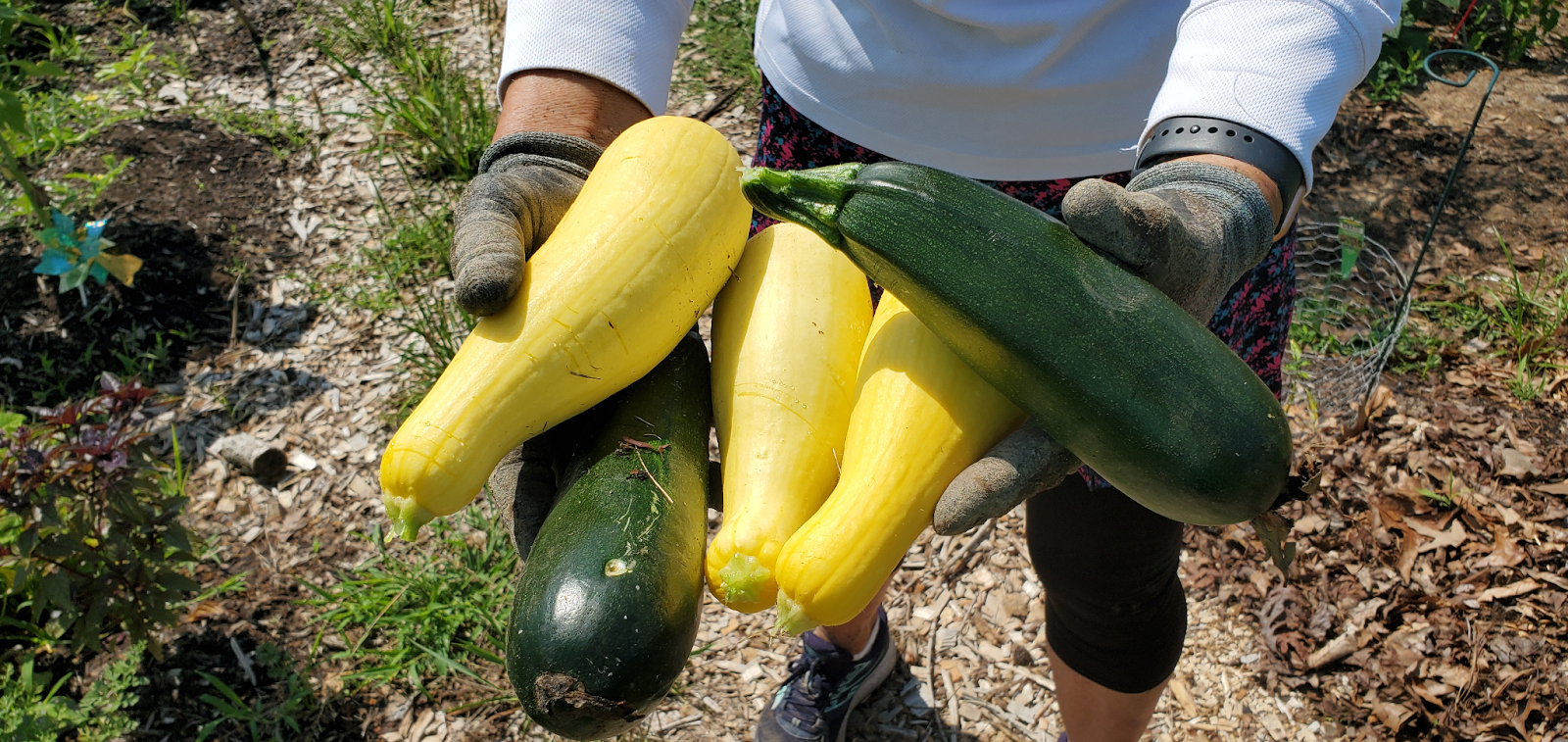
 “Sneak Some Zucchini Onto Your Neighbor's Porch Day” is August 8. Especially the zucchini that hid from you until they were HUGE! We are sure your neighbors will love the extra produce!
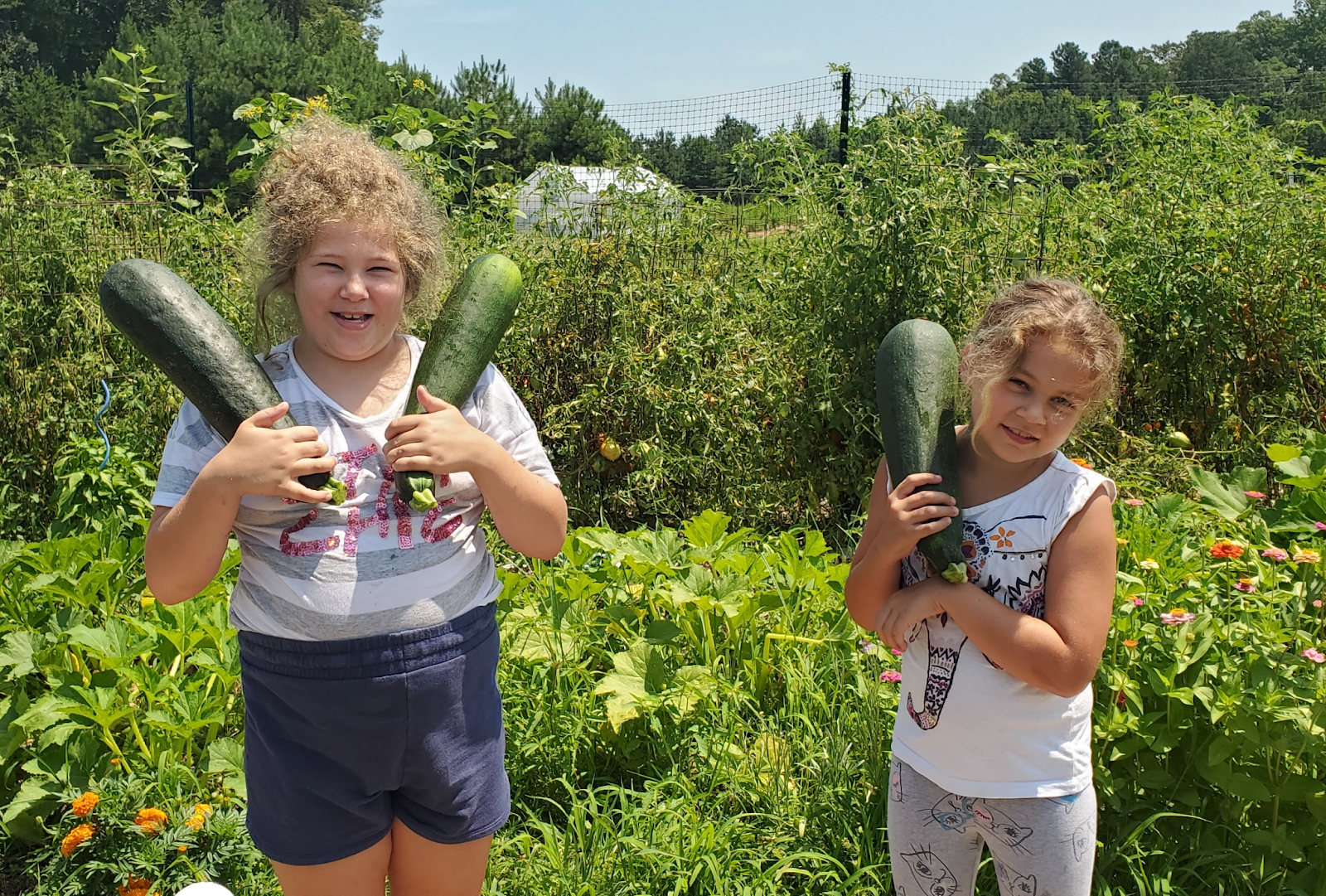
CG’ers Kylee (age 9) and Bailey (age 6) Gutierrez, harvesting baseball bats


Thanks to the Volunteers for the Work Party July 10


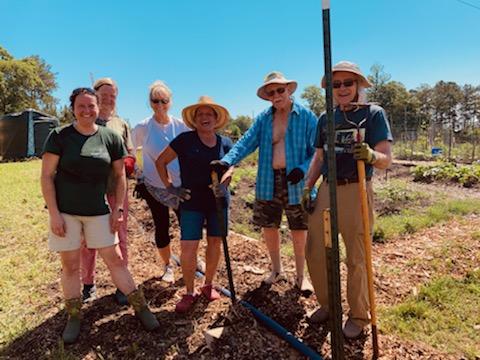
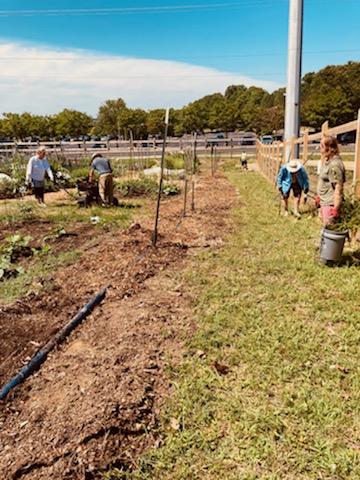
Many thanks to Barbara Loesch, Todd Lee Goen, Eric Wightman, Dee Zarnowski, Meghan Lamoreaux, and June Skalak who came out in the heat for this month’s work party. Weeds were pulled, cardboard was deployed, and wood chips were spread. Great work, you guys!


Next scheduled Work Party is Saturday, August 7. Come out and get your volunteer hours in!


BUG ALERT!!


Squash - The Bugs

By Elvin and Kay Clapp, Experienced Gardeners
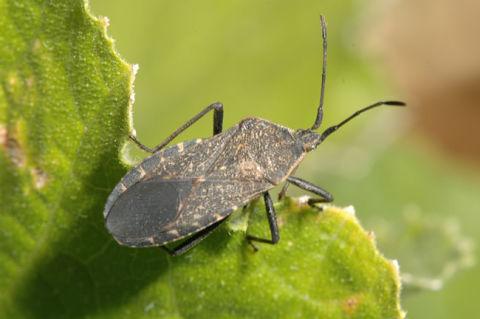
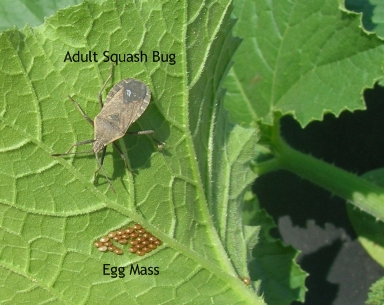
Well, there’s a bug lurking on your squash, zucchini, and pumpkin plants and it is not a pretty sight. Yes, we are talking about “squash” bugs. The good news is that their life cycle is about 5-6 weeks and we are only visited by one generation each year. The bad news is that their life cycles can overlap and you will see these suckers anytime your plot is growing and glowing.

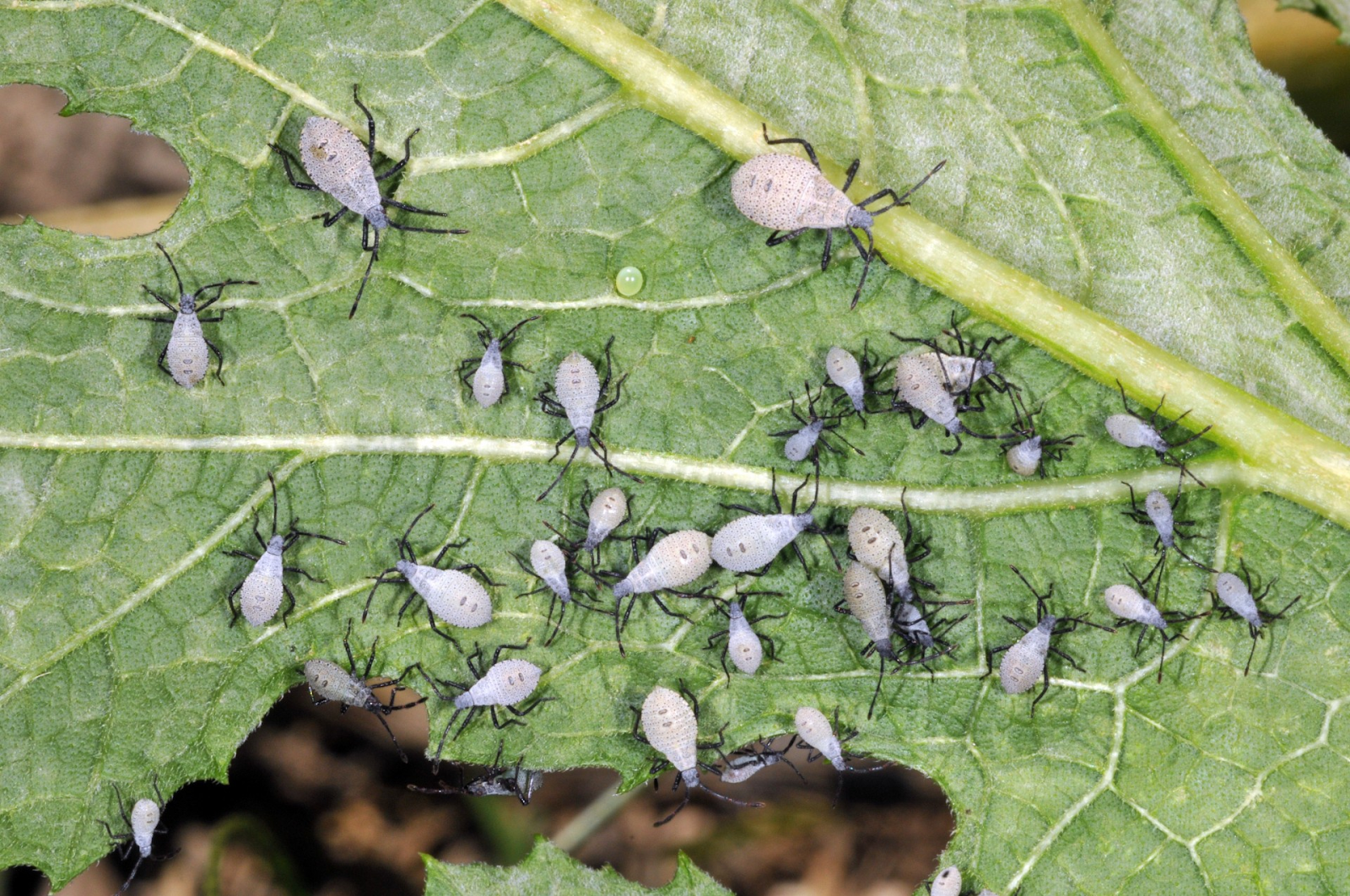
Adults winter in plant debris, such as mulch, and under boards and around buildings. They start to spring from their hideaway in mid-spring to mate and feed. Each female leaves us 20 or so copper/bronze-colored eggs on the bottom of leaves. Mid-May to mid-June is prime hatching time and the little black headed nymphs with green bodies are here for your viewing pleasure. Adults are 5/8 inch long with piercing/sucking mouths that zap the sap. The leaves of your beautiful squash plants begin to wilt and could lead to early plant demise. All that work that you put in to nourish those beautiful plants could go by the wayside.

So, what is a gardener to do?

  • Remove nymphs and eggs with duct tape.

  • Pick those adult suckers off and put them in soapy water.

  • Try trapping. Adults will gather under boards, newspapers, and cardboard at night. Lift the boards, etc., and dispose of bugs in the morning.

  • Don’t stress your plants. Water as needed.

  • Products such as Neem Oil™ and horticulture oil are effective when sprayed on nymphs. But follow the directions. Spray early morning or late evening. Do not apply above 90 degrees. Avoid using during pollinator activity.

  • Forget trying to sneak in non-organic insecticides when Liz and Charlie are not around. Adult bugs are difficult to kill with insecticides available to home gardeners.

  • Frost will kill the nymphs, but you still have those adults partying during the winter.

Start planning for next year’s crop.

  • Do fall cleanups of all plant debris, including above ground mulch.

  • Break up soil clods. 

  • Check seed catalogues for types of squash that are resistant to these bugs.

  • Use wider spacing between plants – which is a challenge given the size of your plots. 

  • Avoid planting the same plant in the same space two years in a row. 

Below is more information from the extension service of universities in our region. Happy hunting!
Additional Resources:

Squash Bugs – Vegetables. Has excellent photos of all stages of squash bug life cycle:  Squash Bug - Vegetables | University of Maryland Extension (umd.edu)

Lookout for Squash Bugs. It’s a practical guide for the home gardener:  Lookout for Squash Bugs | North Carolina Cooperative Extension (ncsu.edu)


Tomato Hornworms
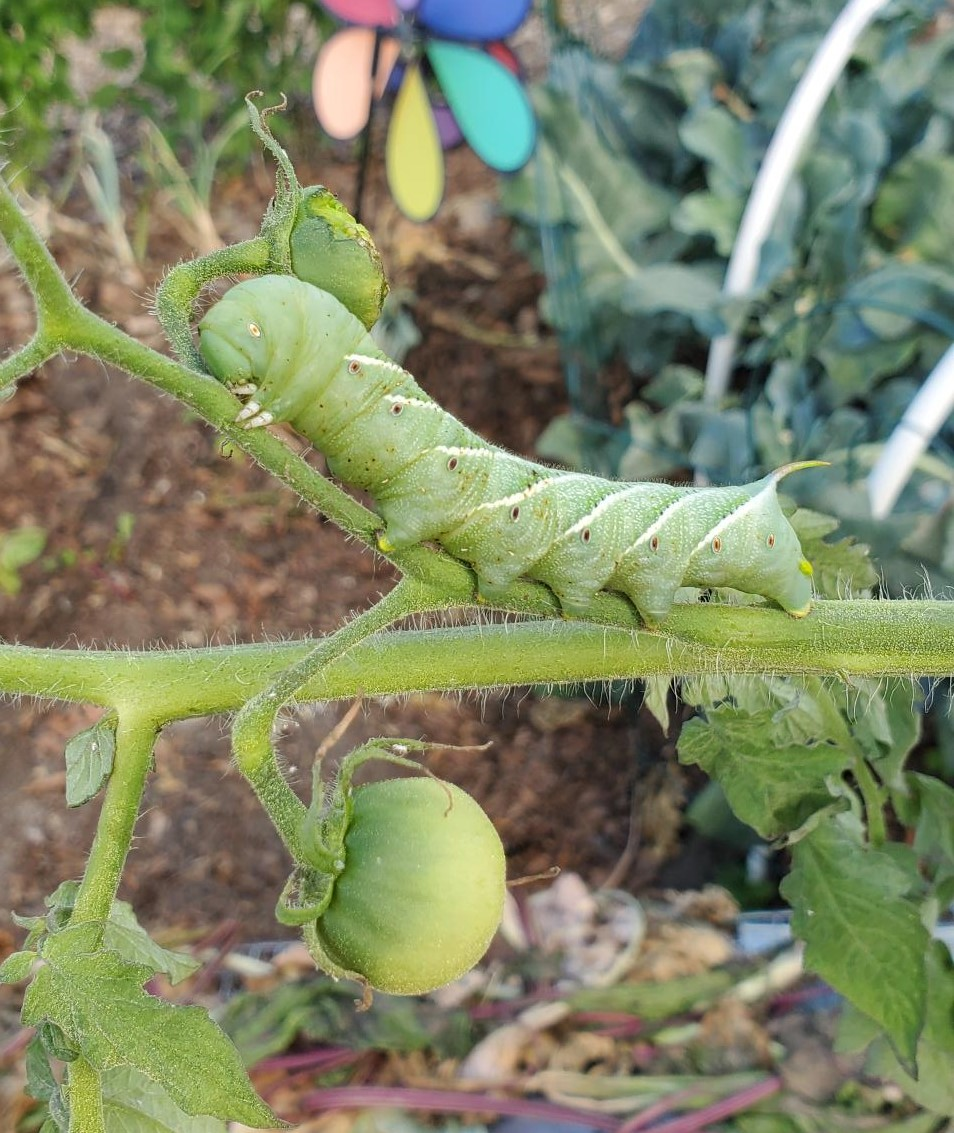

Have you seen any of these little beauties?? Maybe not, as they are masters of camouflage. You will know they are there when an entire branch or top of your tomato plant, including the tomato, is gone overnight. In detective novels they say to “follow the money”. In finding a hornworm, you should “follow the frass”, or the blackish nuggets of poop they leave behind. Once you have found the little bugger, just pick him off and dispose of him as you see fit. 

Guardians Not Gardeners: The Work of Mary Reynolds and the We Are The Ark movement.

By Jennifer Myers


Hello Fellow Gardeners, (Guardians)


I wanted to share the work of Mary Reynolds with you, for those that are not familiar and for those who are - this might still be news.


Mary is a self described “reformed” landscape designer, wildlife activist and author based in Ireland. She has spent her career making fantastic gardens that embrace the living-earth-mysticism of the Celtic religion and spirituality. They frequently utilize spiraling stone walls in the style of the Fibonacci sequence; unkempt native flowers and wildlife, often referred to as ‘Forest Gardening’; stone sculptures in the style of traditional Celtic art; and the shapes and patterns in nature.


She is famous for winning the Chelsea Flower Show in 2002 at the age of 28, the youngest person to ever win. She won for her design called ‘Celtic Sanctuary’ - it was the complete opposite of your typical manicured English garden with rocks, 500 native plants of Ireland, a moon garden. It is a wonderful story that rocked the establishment and gave back wildness, and the Irish Celtic understanding of the earth and stewardship, that so many fancy English gardens are missing completely. A movie called ‘Dare to be Wild’ was made based on her life story, featuring this part prominently.


As she continued her career, she became more and more disenchanted with making “pretty gardens” that looked like you were trying to make a person fit into a pink tutu, as she says. So instead she kept embracing and re-evaluating what it was about the wild side that was so necessary and urgent, and one day while sitting in her garden working on a design for a client, she watched out her window as a bunch of animals ran fast across her lawn - a fox, rabbit, hedgehog, and others. She was confused, what was this about? She walked out to discover that the vacant lot adjacent to her home had been bought and was being bulldozed for a new home after sitting for many years in a ‘neglected’ state. However it was not really neglected, it was instead teeming with life! It had become a wild refuge for so much flora and fauna, and in an instant was being demolished. Of course we know this is happening all over the world, as I type this, but to have it happen before your eyes changes your understanding of what it really means for humans to literally be “devouring the planet” as the acclaimed artist Maya Lin has said repeatedly.


This was one of those defining moments in a person's life. For Mary, who saw the animals running as a reverse-migration of Noah and The Arc, she came up with an idea for a global movement called We Are the ARK. ARK stands for Acts of Restorative Kindness.


Instead of writing a book about these ideas, she instead built a comprehensive and spanning website: www.wearetheark.org. We Are The Ark is based on the simple idea that we must all be actively involved in weaving a patchwork of safe havens for Nature globally, in our gardens, backyards, schools, public spaces, and beyond. She sets out a list of 8 steps for what this means.


Here are the main highlights I wanted to make sure to include from the site:


What Can One Person Do To Make A Difference?

For those of us that care about the living world around us and are aware of the challenges we all face, this is a painful and desperate time – but there is hope. We have waited too long for changes to come from our leaders and politicians. We cannot wait any longer. The change will come from the ground up – it will come from us.


This is a call to step up and reassess our management of every individual tiny patch of the earth possible. It’s a call to the guardians of the earth to step forward and make themselves known, to raise their voices. We need to help the natural world and not hinder it. We have to invite nature and wildness back into our gardens, parks and every tiny patch of this earth we can. To create sanctuary, food and habitat for the creatures we are supposed to share this planet with and who in return will help us survive here within a truly natural and beautiful environment.


It’s up to each of us to re-wild our world, piece by piece until we have a patchwork  quilt of sanctuaries that wraps its way around the globe.

We Are The Ark. We Hold The Seeds For A New Earth.
Things are only hopeless if we do nothing, so let’s do something!

Let’s build an Ark.

"We are all becoming more aware of our climate breakdown but we seem less aware of the silent killer that is the loss of biodiversity and habitat. This is happening at a staggering rate and is equally – if not more – potentially devastating. With climate change we might feel the impact in our every day lives, but with biodiversity it is not so clear.  By the time you feel what’s happening, it may be too late”.            Cristiana PaČ™ca Palmer UN Leader on biodiversity. Executive Secretary of the Convention on Biological Diversity (CBD)

I invite each of you to visit the website, and to also look at her website www.marymary.ie


I am going to be reading her 2016 book “The Garden Awakening” and wanted to see if others wanted to read it too, and then we can talk about it. I also wanted to see if people wanted to gather in a club to talk more about the We Are The Ark movement and what we are doing in our lives to help move this forward.


Thank you for reading, and I hope to hear from some of you!
 You can reach me at jennifernaglemyers@gmail.com


Best, Jenn


GARDEN GROWERS

People in the Garden


Hi! My name is Kirsten, and I am the summer intern from William & Mary this year. After the summer, I will be starting my senior year and finishing up my degree in Chemistry and Music. Although gardening has little to do with my academic pursuits, I am grateful for the opportunity to explore a new skill that I otherwise may not have tried out.


My gardening knowledge was very bare bones before coming here at the beginning of June, but Liz and Charlie have done a great job covering the basics of vegetable growing without making me feel like I lacked any common knowledge. They have also wholly supported the mission of WCG: creating a healthier and more sustainable community. I come from a family that prioritizes healthy living, but I have been surprised by how much healthier my lifestyle has become just by coming to the garden. I have gotten so much exercise, sunshine, sleep, and nutritious food—all the things that usually fall by the wayside during the stressful times of the semester.


My favorite part of this summer has been seeing the whole process behind the food I eat. I can usually be found in the kitchen cooking during my free time, but I often forget to eat my veggies. Now that I bring produce home from the garden, I have enjoyed coming up with creative ways to prepare the different veggies coming in and out of season.


The other thing that stands out to me from this summer is the community at the garden. It has been fun to mix with people both younger and older than me. I have enjoyed meeting community gardeners and hearing all the wisdom that my elders have imparted to me; so far, I’ve heard plenty of advice ranging from “remember to wear sunscreen so you don’t have to go to the dermatologist when you’re my age” to “hang around someone rich until they fall in love with you, and then marry for money.”


I am grateful to have had this opportunity at the garden this summer, and I thank you all for welcoming me into the community!



COOKING FROM THE GARDEN

Have some extra large cucumbers that you don’t know what to do with? Try this recipe from CG’er Carol Fryerfor Cucumber soup.


Cream of Cucumber Soup            

Potage aux Concumbres


This soup is based on a Julia Child’s recipe and is fabulous!  It is a good way to 

use large cucumbers that are too big to serve in a salad. 


2 lbs. cucumbers               

1/2 cup chopped dill  (or tarragon)

2 tablespoons butter             

1 cup quick cooking farina 

1/3 cup chopped onions           

½ cup Crème Fraiche (or sour cream)

4-5 cups chicken broth           

salt and pepper

1 tablespoon white wine vinegar


Peel cucumbers and cut in half lengthwise. Scoop out seeds with a spoon, then roughly chop the cucumbers. 

Melt the butter in a pot and cook the onions until wilted – 3-4 mins.  

Add the chopped cucumbers, broth, vinegar, and 1/3 cup of dill. 

Bring to a boil, and stir in the farina. Simmer uncovered until the farina is very soft- about 20 mins. 

Puree the soup in an electric blender. 


Before serving, reheat the soup and add a little water or broth if it is too thick, then stir in the crème fraiche  or sour cream. Top each serving with some dill, a dab of sour cream and very thin cuke slices, if desired.


For a cold version, chill, and just before serving, whisk in chilled crème fraĂ®che or sour cream. 


Note: Bob’s Red Mill wheat farina is available in local grocery stores. Cream of Wheat cereal = farina - is no longer in local stores.  If you can’t find farina, substitute ½ lb. of cubed potatoes.    

Crème Fraiche  has a very rich flavor . To make it, combine 1 cup whipping cream and 1 Tblsp of buttermilk in a glass bowl. Cover and let stand at room temperature for 10-24hrs until very thick then stir and refrigerate. 

Trader Joe’s carries Crème Fraiche – it is so good!


Wednesday, June 9, 2021

June 2021


Successful Work Party!


Thank you to all the Community Gardeners who came out to the Work Party on Saturday, June 10th. It was very hot and humid, but we were able to get the entire old fence line along Stadium Road cleared of weeds, brambles, and trees. Jessica Stephens brought a car-full of cardboard which was spread out to suppress the weeds. Then, Liz Callan used the tractor to bring up 4 loads of wood chips which were spread on top of the cardboard. Great work, everyone!


The next Work Party will be on July 10. Mark your calendars!


Work Party June10 - Jessica Stephens,Melissa Cole, Dee Zarnowski, Barbara Arnold, Will McElfresh, Eric Whightman. Not pictured - Doug Garrou, Marsha Maisey, Bill Hassenger.


Cleared fence line.


Insect Alert!


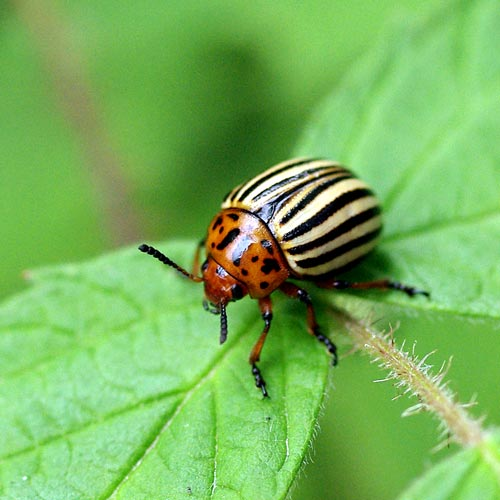
Recently we are starting to see the emergence of the Colorado Potato Beetle (CPB) in the garden. This pest was very annoying 2 years ago and was present last year but not to such an extent. As the name implies, these pests' favorite host will be potato plants. However, they can also attack other plants in the nightshade family (Solanaceae), including eggplant, tomato, pepper, nightshade, and ground cherry.

Adults overwinter four to 12 inch deep in the ground of harvested potato fields and emerge in spring around May. Adults do not migrate but will fly for several miles to find their Solanaceous hosts. Adults then mate and lay eggs on the host plants. Egg laying may last as long as a month and may be as many as 500 eggs on a single plant. After four to 10 days, depending on temperature, eggs hatch.


CPB undergo complete metamorphosis: adult, egg, larva, and pupa.

Adults are hard-shelled with a round, convex shape. Their forewings are yellow with a total of 10 black stripes running longitudinal. They are about a half an inch long. Adults eat foliage until they pupate.

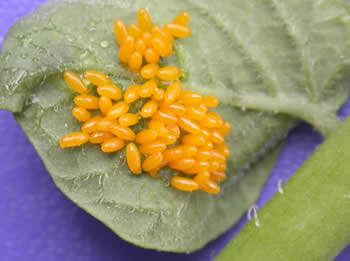
Eggs are oval, yellow to bright orange. They are laid in clusters of 10 to 30 eggs on the underside of leaves.


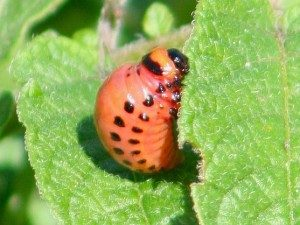
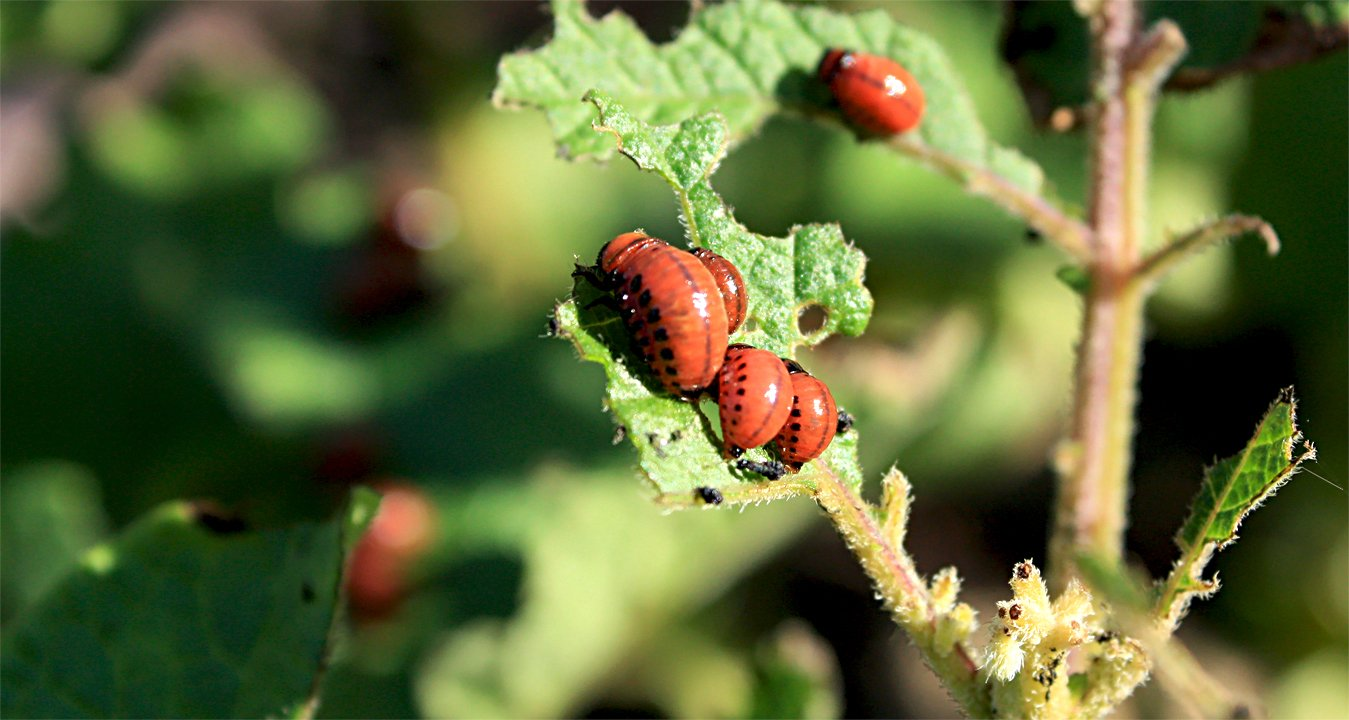
Larvae are slug-like with a soft shell. They are red to orange to tan depending on age and they have two rows of black dots on each side. The body which is humped enlarges with time and grows in four size stages. Larvae eat foliage as they grow and this is the most destructive stage. These larvae can decimate a plant if not controlled 


Pupae are small and are found in the soil .

Control: 

The best organic method for controlling the CPB is to hand pick and squoosh the rascals. It is usually preferred to wear gloves when doing this. It is also effective to drop them into a cup of soapy water. The smaller larvae are easy to squoosh in large quantities when they first emerge and are close together on the leaves. Also important is getting rid of any eggs in the same manner. As with the harlequin bug, breaking the reproductive cycle early in the season will yield huge results longer term. 

CPB are essentially resistant to all synthetic pesticides. 

Neem oil is effective for a few days and probably will require repeat applications. Neem is less effective on the larger larvae and the adults. 

Spinosad, made from soil bacterium, is effective for about 10-14 days. 

If you have insecticidal soap or insecticidal soap plus pyrethrins, this mixture may offer some effectiveness as well, especially on the larvae.


Word of the Month


Mulch, mulch, mulch, mulch!


As the heat increases heading into summer, a layer of leaves (even better, with a layer of newspaper underneath) will (1)keep the roots of your plants cool, (2) hold moisture so you can water less frequently, (3) suppress weeds so you don’t have to weed as frequently, and (4) decompose over the season and add nutrients to your soil. Win, win, win, win.


Caught the rabbit!

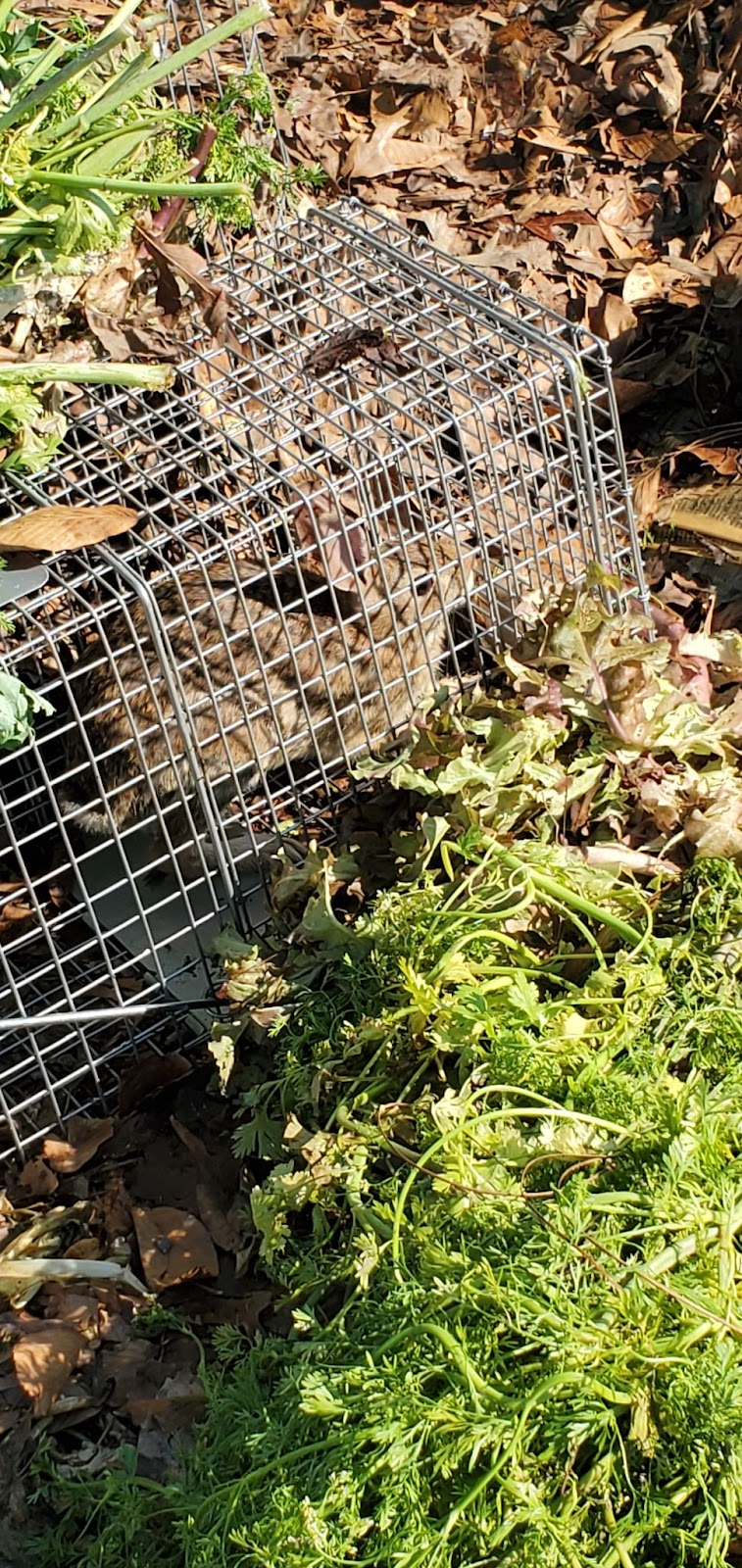
Here is the cute little varmint who has been eating us out of house and home in the plots near Stadium Road. At least, we HOPE this is the one. He has been safely relocated to Melissa Cole’s bunny sanctuary where he is loving the clover fields, but probably missing dining on Bill Wallace’s succulent bean sprouts. We will keep the trap baited in case there are more.


Macintosh HD:Users:cfryer:Desktop:IMG_0189.jpg


FERTILIZERS:  WHAT IS N-P-K all about?

by Carol Fryer


Fertilizers are valued for supplying nutrients for plants. 

Plants utilize the nutrients for plant growth.

Fertilizers can be organic or inorganic. Organic fertilizers contain only plant- or animal-based materials that are either a byproduct or end product of naturally occurring processes, such as manures, leaves, and compost. Inorganic fertilizer, also referred to as synthetic fertilizer, is manufactured artificially and contains minerals or synthetic chemicals.


The primary nutrients that plants must have in the soil are N-P-K, otherwise known as:

Nitrogen (N), Phosphorus (P)  and Potassium (K).  

Most fertilizers that you buy at a store are labeled with three numbers corresponding to N , P and K, such as 10-10-10. 

A fertilizer with all three main nutrients in about equal quantities is a balanced fertilizer.


 The numbers tell you what percentage of the net weight is composed of these three numbers.

For example, a 50 lb. bag of 10-6-4 will contain 5 lbs. of  nitrogen 

(10% of 50 lbs = 5 lbs.), 3 lbs. of phosphate, and 2 lbs. of  potash. 

( Phosphate and potash are the available forms of phosphorus and potassium.)


The secondary nutrients are: calcium, magnesium, and sulfur, plus small amounts of the 

micronutrients – boron, copper, chlorine, iron, manganese, molybdenum and zinc. 


Feed the Soil First :  The best way to improve plant growth is by regular addition of organic matter such as compost to your soil.  Organic matter improves soil structure, releases nutrients slowly, and increases good microbial activity in the soil. 


Inorganic  (chemical) fertilizers are usually less expensive and more readily available for plant growth than organic fertilizers.  However, organic fertilizers release nutrients slowly over the growing season and often are also soil conditioners, aiding the microbial activity in the soil.


Some fertilizers, such as Osmocote are slow-release fertilizers, and make nutrients available in small quantities over an extended period.  Starter fertilizers are specially formulated for seedlings and transplants, and are high in phosphorus to aid in root growth. Garden-Tone is an organic fertilizer specifically formulated for veggies.


How to apply fertilizer -Fertilizer can be applied in a number of ways. Most often a dry fertilizer will be applied as a top dressing (scattering the fertilizer around your plant) or as side dressing (placed in a furrow on the side of your plants). Liquid fertilizers are generally poured on the root area of your plant. Foliar fertilizers are sprayed onto upper and lower leaf surfaces. They are good for seedlings and transplants.


Know your soil - Most garden plants perform best in soils with high organic matter – more than 3% in the topsoil - and a near-neutral pH. If your soil’s pH is high or low, your plants will not be able to uptake the nutrients you have provided for them.


To learn more about your soil structure and nutrient needs, a Soil Test every 3-4 yrs. is worthwhile to have.  You will receive information about your soil levels of N-P-K, the percentage of compost in your soil, the pH of your soil, and information about nutrients you may need to add to your soil. Soil Test packets are available at the JCC Extension Office on Forge Rd. and are also available at the Community Garden from a Garden Committee member. Once you take your sample you send it to the Soil Test Lab at Virginia Tech (it costs around $10) and they will return it to you soon, depending on their workload at the time.


How often to fertilize- The answer to this question, as is often the case in gardening, is “it depends”. If you have healthy soil and microbes that are continually decomposing organic matter in your soil to release nutrients, fertilizing is not as important. Also some types of plants, like tomatoes, cucumbers, peppers, and squash, are heavy feeders and supplemental nutrients are more important for them than for light feeders like beans, peas, and turnips. And, plants need nutrients the most when their roots are getting established and during flowering and fruiting.


A rule of thumb on frequency is to fertilize throughout the growing season (until early fall) once every 4 to 6 weeks.  Heavy feeders could benefit from a shorter cycle. Gardens with poor soil may need more frequent fertilization. 


Remember, sometimes more is not necessarily better. If you over-fertilize your plants, especially with a fertilizer high in nitrogen, you can find you produce lovely, green, leafy plants that will not produce fruit. If you apply fertilizer at higher rates or in a higher concentration than recommended, you risk burning your plants. 


Always read and follow the directions on the label.


Reference and more info:  Fertilizing Vegetables


Spotlight on emerging Pests


The Harlequin Bug


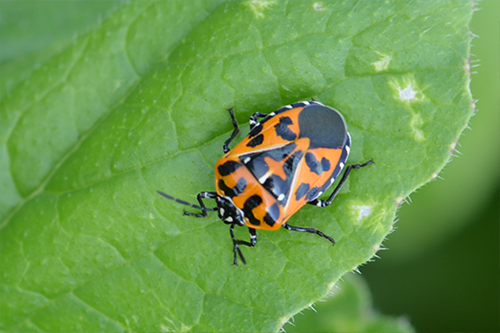
Already this season, harlequin bugs have been spotted in the Garden. These bugs prefer plants in the Brassica family, so you will find them on your broccoli and cabbages. The harlequin bug damages plants by inserting its beak-like mouthpart into plant tissue and sucking out fluids, which destroys plant tissue and potentially kills plants, particularly young plants. Damage appears as stippling or light-colored cloudy spots. Young plants will have larger areas of plant tissue with dead patches, wilting, deformed growth, and possibly plant death. 


What are they?

The adult Harlequin bug, a shield-shaped bug with bright red, orange, and black markings, is generally about 3/8"-1/2" in length.

Nymphs look similar to the adults, but they are more roundish in shape and do not have wings.

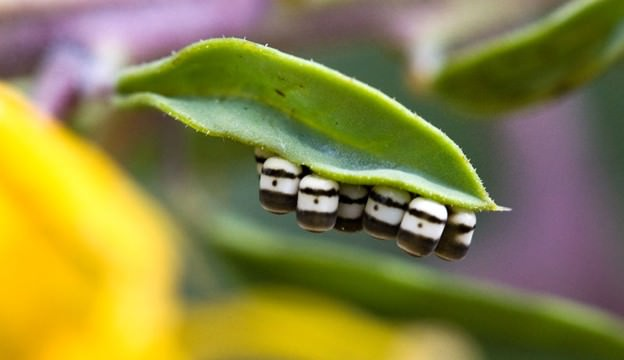
Eggs are barrel-like in shape and are light yellow or gray. The eggs are deposited in clusters on the leaves of crucifers.

How do they reproduce?

Harlequin bugs spend the winter hidden under plant debris, then, after emerging in the spring, females will lay their eggs. Eggs are laid in two-row clusters on the underneath parts of leaves. When she has finished, the female will have laid about 150 eggs. The female will fiercely defend her eggs from predators.

Within three weeks, the eggs will hatch and the emerging nymphs will begin feeding on the host plant. Nymphs feed for about two months and progress through five instars until they become adults. There are anywhere from 1 to 4 generations per year depending on the climate of a particular region

The impact may seem slight, but each female can produce 164 offspring. Without any control measures, her 82 female offspring can produce over 13,000 offspring in the second generation, and so on. So interrupting the cycle can really help control the population.


How to control them?

An effective way to kill harlequin bugs organically is with a simple combination of a 1-percent insecticidal soap solution, which penetrates their hard shells, plus neem (0.9 percent) or pyrethrin (0.012 percent). This combination is a contact-insecticide, so you'll have to squirt the eggs, nymphs and adults directly. These 3 insecticides are effective on a variety of insects in the garden. The Safer line of products includes a combination of insecticidal soap and pyrethrin in one bottle. (Pyrethrins are derived from chrysanthemums.) This can be purchased online or at some of the big box stores.

 As always, read and follow the instructions on the label when applying.

Other control measures?

  • Clean up garden at season’s end. Remove all crop debris to eliminate overwintering sites

  • Search out and manually crush eggs, nymphs, and adults

  • Use floating row cover to exclude the pest

  • Grow Cleome flowers as a trap crop. Spray infested cleome with insecticide or pull plants up and dispose of in black trash bags

  • Check catalogs for resistant varieties of many cruciferous plants


Garden Growers


People in the Garden


Meet Community Garden Coordinator Barbara Arnold


I came to horticulture later in life, though my father was one of the earlier adopters of organic gardening at our home in upstate New York. He had the best soil after years of adding a truck load of NY leaves every autumn! I learned alot from him.  


I studied psychology at SUNY Oswego (fellow CG’er Eric Wightman is also an alum!) then got a Masters in Industrial Relations at Cornell, where I met my husband. I worked in Human Resources for 15 years, then was lucky enough to be able to stay home with my two children.


I have lived in 11 states, but when we moved to Illinois, our house came with a garden! This was when I started gardening in earnest and joined the Master Gardener (MG) program there. I also began studying Landscape Design at the community college. Classes in Woodys, perennials, shrubs, insects, etc. gave me a lot of information that I was able to apply to the MG program in Illinois and later in Northern Virginia, where we spent 15 years. My favorite jobs in the MG program were working the Help Desk, where I researched and answered gardening questions from the public, and the Speakers Bureau, where I was able to create and present programs for community groups. For 10 years I was also in charge of managing the Plant Sale, our major fundraiser, producing thousands of vegetable seedlings in the homes of MG’ers for sale at the Leesburg Flower and Garden Show. Sound familiar?


I am so happy to have found the WCG and this community of fellow gardeners. I am trying hard in my first year as Coordinator of the Community Garden to keep things organized, keep the communications flowing, and keep everybody happy and gardening successfully. Let me know when it is TMI!


What's Happening!

November 2022

These images highlight how far we have come since 2018 and plans for the future. The hard work and dedication of our volunteers and growers ...